Calls Concerning Your Vehicle’s Extended Warranty
SCP-9639 — by E. S. Fein
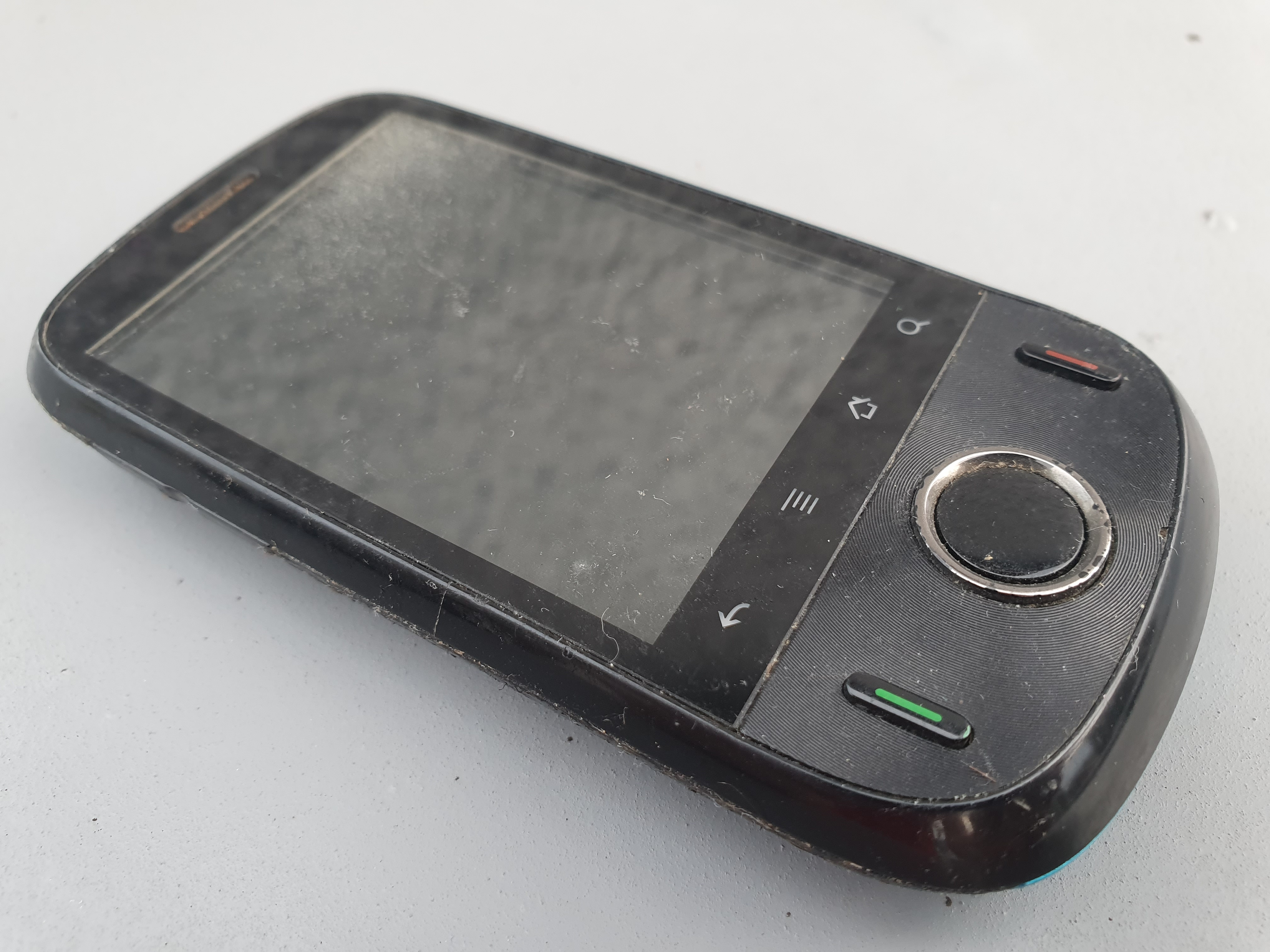
Item #: SCP-9639
Object Class: Euclid
Special Containment Procedures: SCP-9639 is not, at present, contained in the conventional sense. It is administered.
Foundation cooperation with the Federal Communications Commission, the Federal Trade Commission, and equivalent agencies in seven other jurisdictions ensures that automated telephonic solicitation, informally “robocalls,” remains legal in form while subject to enforcement actions of limited effectiveness. Compliance penalties levied against domestic VoIP carriers are paid, in their entirety, from Project DIAL TONE discretionary funds.[1]
Per Project DIAL TONE protocols, North American daily SCP-9639 call volume is to be maintained between 380 million and 480 million instances. Volume below 320 million for more than seventy-two consecutive hours triggers Procedure DIAL TONE-RESONANCE: covert seeding of new automated solicitation campaigns through compromised marketing-firm assets in ██████, ██████, and ██████. Volume above 510 million for more than forty-eight hours triggers Procedure DIAL TONE-DAMPING: targeted disruption of high-volume VoIP infrastructure through ordinary regulatory channels.
Project DIAL TONE additionally maintains an informal liaison relationship with several non-anomalous criminal enterprises engaged in large-scale telephone fraud, primarily operating from Mumbai, Lagos, Tirana, and the Greater Manila Area. These enterprises are non-anomalous and are not, at present, the subject of Foundation interference.[2] Their activity contributes meaningfully to the ambient public expectation that unsolicited telephone calls are presumptively non-genuine.
Personnel are not exempt from receiving SCP-9639 instances. Foundation phones are configured to log SCP-9639-positive calls but not block them. Personnel are reminded that screening, ignoring, or hanging up on an SCP-9639 call is the correct and authorized response.
Description: SCP-9639 is the collective designation for a class of telephonic anomaly manifesting as unsolicited automated calls to civilian and commercial telephone numbers throughout North America and, in increasing volume since 20██, Western Europe, East Asia, and Australia.
It is critical to note that SCP-9639 does not encompass all unsolicited automated calls. The majority of such calls received by civilians are non-anomalous, originating from legitimate (if unwanted) telemarketing operations and, more frequently, from the criminal enterprises noted in Containment Procedures. SCP-9639 instances are interspersed within this larger volume of mundane nuisance traffic and are, by both incident and design, indistinguishable from it to the recipient.
This indistinguishability is the containment mechanism.
Recognized SCP-9639 manifestations fall into four categories:
- SCP-9639-A (“Vehicle warranty” calls): A recorded female voice informs the recipient that the warranty on their vehicle is expiring. The recipient is offered options to extend coverage by pressing 1 or to be removed from a call list by pressing 2. Neither action produces a discernible result. The recipient is, in 94% of recorded cases, not the registered owner of any vehicle whose warranty is in fact expiring.
- SCP-9639-B (“Silent” calls): The recipient answers and hears no sound. The call remains connected for an average of fourteen seconds before the connection terminates from the caller’s end. The caller is not present.
- SCP-9639-C (“Institutional impersonation” calls): A recorded voice purports to be from a recognized institution (Internal Revenue Service, Social Security Administration, Microsoft Technical Support) and demands urgent action. The demanded action, if performed, produces no result. This category is functionally identical to a large volume of non-anomalous criminal calls and is distinguishable from them only through Project HAZEL-GRAY substrate analysis.
- SCP-9639-D (“Fragmentary” calls): A recorded voice begins mid-sentence and ends mid-sentence. The contents do not constitute any solicitation, threat, or comprehensible communication. The voice does not, on review, appear to be addressing the recipient. It appears to be addressing no one.
All four manifestation classes share three anomalous properties.
First, no instance of SCP-9639 originates from a verifiable source. The originating number, when traceable, is registered to a person who did not place the call, to a defunct entity that no longer transacts, or to a number that does not, on inspection, exist. Subpoenaed carrier records produce documents that contradict themselves and one another.
Second, the voices employed in SCP-9639-A, -C, and -D instances are not synthesized. Phonological analysis indicates a human source, but no source can be identified. The voices vary by margins that suggest different speakers between calls, yet no extant voiceprint database returns a match for any of them.
Third, and dispositively: Project HAZEL-GRAY analysis of SCP-9639-B instances detects, in the fourteen-second silence, a cognitive signature consistent with the documented manifestation pattern of SCP-3930 and structurally related entities.[3] SCP-9639 is a manifestation of Pattern Screamers.
The vehicle-warranty calls are Pattern Screamers. So is the silence.
Discovery: SCP-9639 was identified on ██/██/2018 when Senior Researcher M. Iyer of the Memetics Division received seven SCP-9639-A instances over the course of a single afternoon while attempting to complete a routine threat-survey of an unrelated cognitohazard. Her contemporaneous note, paraphrased: the cumulative annoyance was sufficient to produce a brief but measurable cognitive state she recognized from prior work on SCP-3930. The negative-affect imprint Pattern Screamer perception produces in trained observers is, in ordinary conditions, diffuse to the point of unmarked ambient presence. Dr. Iyer was, by her own later admission, in a bad enough mood that the imprint became individually recognizable.
The recognition was forwarded to the Memetics Division and reviewed independently. Subsequent analysis of the call audio, the absent originating sources, and the cognitive aftereffects in a controlled sample all confirmed Pattern Screamer involvement.
The Foundation had been receiving the calls for not less than eleven years prior to their recognition.
Addendum 9639-1: Initial Containment Attempts and Concurrent Anomaly Destabilization
Following the identification of SCP-9639, the Memetics Division proposed, and the O5 Council ratified, a containment protocol consisting of: regulatory pressure on domestic and international VoIP carriers; public-information campaigns advising civilians to disregard unfamiliar numbers; targeted memetic-defense work in high-exposure populations; coordinated law-enforcement disruption of overseas criminal call centers; and selective subpoena of call records under standing federal authority. The protocol was operational from ██/██/2019 to ██/██/2019.
North American SCP-9639 call volume decreased by approximately 11% over the four-month operational period. Non-anomalous call-fraud activity, partially disrupted by parallel law-enforcement action, decreased by approximately 8% in the same window. Total civilian exposure to unsolicited automated calls decreased meaningfully for the first time in over a decade.
In the same four-month window, the following concurrent observations were logged across the Memetics Division’s monitored anomalies:
- SCP-2615 (“The Faerie Race”) manifestation pressure increased by 23% above the rolling six-month average. Intensified ridicule-based memetic countermeasures were required to maintain stable nominal-folklore containment.
- SCP-426 (“I am a toaster”) exhibited a 2.4% increase in narrative-spread velocity through previously unaffected populations, the largest such increase since the article was first archived. The article’s containment protocols, which depend on the first-person narrative remaining a recognizable curiosity rather than a serious propagation vector, came under measurable strain.
- SCP-055 returned, for the only documented period since its initial designation, partially specifiable properties. The properties returned were not consistent with one another, and reverted to baseline upon suspension of SCP-9639 containment activities.
The pattern was reviewed by the O5 Council. The provisional finding, ratified ██/██/2019: SCP-9639 functions as a low-grade dissipative outlet for ambient Pattern Screamer activity. Reduction of the outlet, whether achieved through anomalous suppression or through suppression of the broader ambient nuisance environment, redistributes that activity into other anomalies whose containment depends, in whole or in part, on the same substrate.
The criminal call-fraud ecosystem was, in this analysis, found to be doing substantial unpaid work on the Foundation’s behalf.
Project DIAL TONE was authorized on ██/██/2019, replacing the prior containment protocol with the active maintenance of call volume described in current Containment Procedures.
Addendum 9639-2: Operational Notes, Project DIAL TONE
The Foundation does not generate SCP-9639 calls. The calls generate themselves. Project DIAL TONE’s operational role is to ensure that the public-policy, regulatory, infrastructural, and criminological conditions under which the calls propagate remain stable.
This includes:
- Maintaining the legal and regulatory environment in which automated telephonic solicitation is technically restricted but functionally tolerated.
- Suppressing technological countermeasures — including mandatory caller authentication, network-level filtering, and integrated AI-based screening — that would meaningfully reduce nationwide call volume below the maintenance band. Suppression is achieved through ordinary lobbying, regulatory capture, and selective antitrust intervention. No anomalous means are employed.[4]
- Maintaining the non-anomalous criminal call-fraud ecosystem in a condition of sustained, low-grade operability. Disruption efforts are permitted at a level sufficient to maintain public belief that “the authorities are doing something” but insufficient to meaningfully reduce the volume of nuisance calls received by civilians.
- Permitting and, where necessary, encouraging the social adaptation by which civilians treat unfamiliar numbers as presumptively non-genuine, decline to answer, and rely on voicemail screening as a default behavior.
- Ensuring that civilian frustration with the phenomenon remains low-grade and ambient rather than acute, organized, or politically actionable. The phrase “I just don’t answer my phone anymore” is, per Project SOFTWATER tracking, now spoken by approximately 71% of surveyed Americans aged thirty and over within any given month. The phrase is regarded as a containment success indicator.
Sociological impact of the maintained outlet is logged under Project SOFTWATER. Recent findings of note include a measurable decline in unmediated voice communication between civilians who are not previously acquainted (estimated 31% reduction since 2013), an associated decline in cold-call commercial activity, a documented annual loss of approximately $39.5 billion to non-anomalous telephone fraud against U.S. civilians (disproportionately affecting adults over sixty-five), and a modest but persistent increase in self-reported social isolation across the same demographic. These effects are not the only contributors to the underlying social trends and are not assessed as containment failures.
Addendum 9639-3: Memorandum, Senior Researcher M. Iyer
The following memorandum was filed to the SCP-9639 project record on ██/██/20██ and retained without alteration at the author’s request.
I have been the lead investigator on Project DIAL TONE for six years.
I have read every monthly report. I have signed every quarterly authorization. I do not propose to revisit the project’s operational findings. The calls are a relief valve. The relief valve works. The cost is acceptable.
I would like to note, for the standing record, that the cost is also real.
My mother is eighty-one. She lives alone in Pune. Two weeks ago she received a call, in Marathi, from a man who claimed to be from her bank. He told her that her account had been compromised and that she needed to transfer her savings to a secure holding account he would provide. She nearly did. She stopped because she remembered a story about a neighbor’s cousin who had lost everything to a similar call last year, and she called me instead.
The man who called her was not a Pattern Screamer. He was a criminal in Mumbai, working from a call center the Foundation has the operational capacity to dismantle and the standing instructions not to.
My mother did not lose her savings. The neighbor’s cousin did.
I am writing this because the project’s finding — that the cost is acceptable — has, over time, become difficult for me to distinguish from the project’s other finding, which is that there is no one to whom we owe an accounting. The Pattern Screamers do not care that we have offered them this outlet. The criminals do not know we are protecting them. The civilians do not know we exist.
We have made an arrangement, in this small way, with cosmic spite and ordinary fraud. The arrangement is that the Pattern Screamers may have a small, dull share of human attention. In exchange, several anomalies that would otherwise be far worse remain manageable, and several thousand cold and patient men in cities I have visited continue, with our tacit consent, to take money from elderly women who picked up the phone.
I would like the record to show that this is what we have decided. I would like it to be in the file, in plain language, so that whoever inherits Project DIAL TONE from me cannot pretend the decision was not made.
— M. Iyer, Senior Researcher, Memetics Division
Cross-references: SCP-3930 (The Pattern Screamer); SCP-2528 (Pattern Screamers, retained-memory subset); SCP-055; SCP-426; SCP-2615; Project DIAL TONE; Project DIAL TONE-HOLLOW; Project HAZEL-GRAY; Project SOFTWATER.
Footnotes
1. No carrier has been informed of the arrangement. Carriers contest and pay these penalties as ordinary regulatory costs of doing business. Foundation reimbursement is routed through legitimate civil settlements administered by cleared personnel within the relevant agencies. The arrangement has been described, in one quarterly review, as “the most discreet subsidy program in the world.” ↩
2. The Foundation does not direct, finance, or coordinate with the operators of these enterprises. The liaison consists of selective non-enforcement: Foundation personnel within partner law-enforcement agencies are instructed not to prioritize cases above certain thresholds, and not to share intelligence that would meaningfully disrupt the broader call-fraud ecosystem. This includes operations that defraud elderly civilians of substantial sums. The ethical-review documentation associated with this protocol is filed under Project DIAL TONE-HOLLOW. It is voluminous. ↩
3. The signature is faint and broadly uniform across recorded instances. Trained analysts describe the experience of listening to an SCP-9639-B recording, attentively and at sufficient volume, as producing a brief, diffuse, low-grade variant of the negative-affect imprint produced by direct perception of SCP-3930. The imprint dissipates within approximately ninety seconds. Personnel are advised that there is no operational reason to ever do this. ↩
4. The O5 Council determined that Project DIAL TONE’s containment value depends on the phenomenon’s continued ambient invisibility. The calls must remain a banal nuisance, not a recognized administrative artifact. Anomalous suppression would produce a measurable second-order signature. ↩
 Official E. S. Fein